
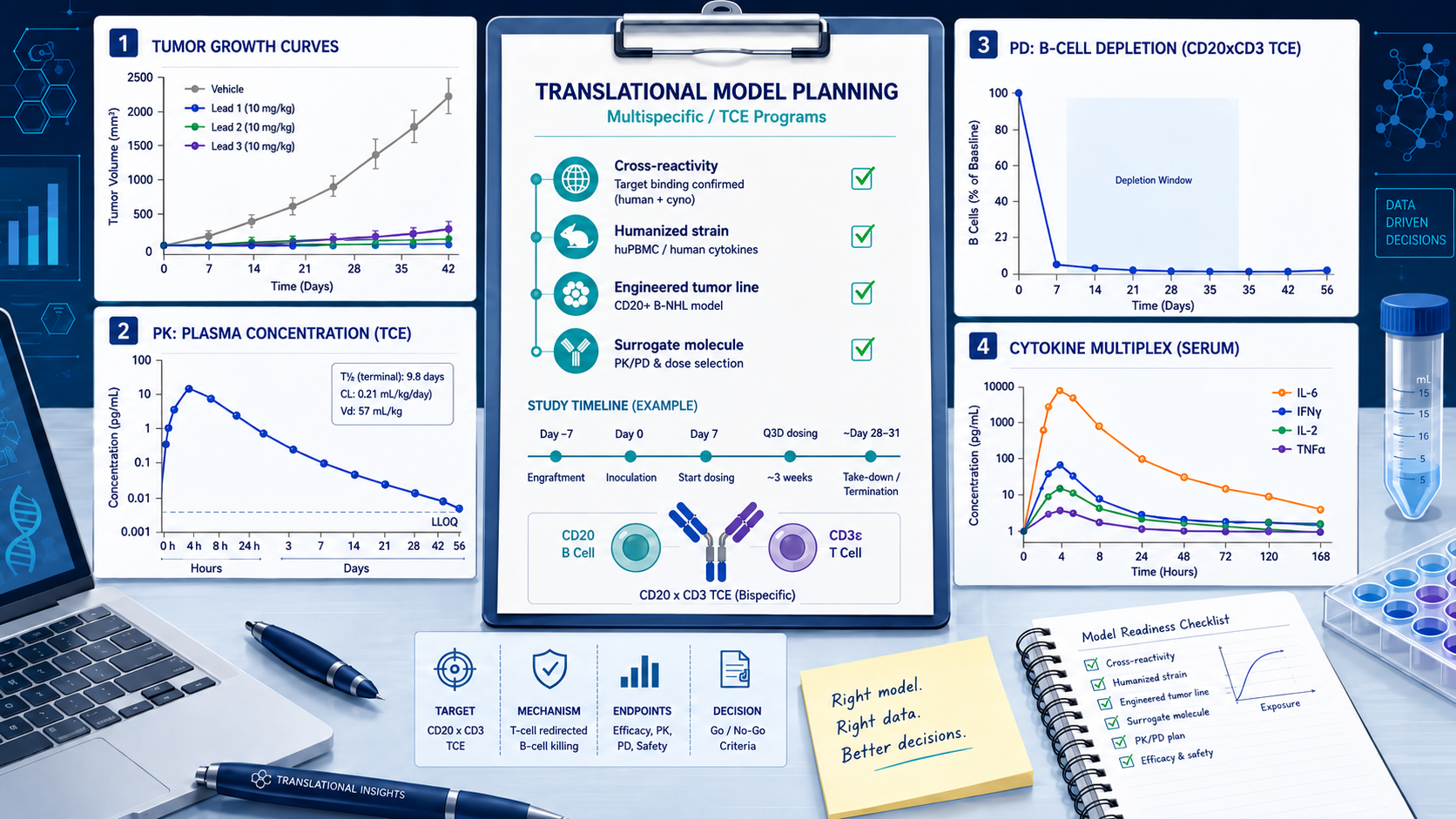
Start the Mouse Model Before Your Leads Are Ready
In vivo model planning should not wait until lead nomination. For multi-specific oncology programs, the right mouse model may require cross-reactivity testing, humanized strains, engineered tumor lines, or surrogate molecules — each with real timeline risk. The earlier founders start planning, the more options they have when the data matter.
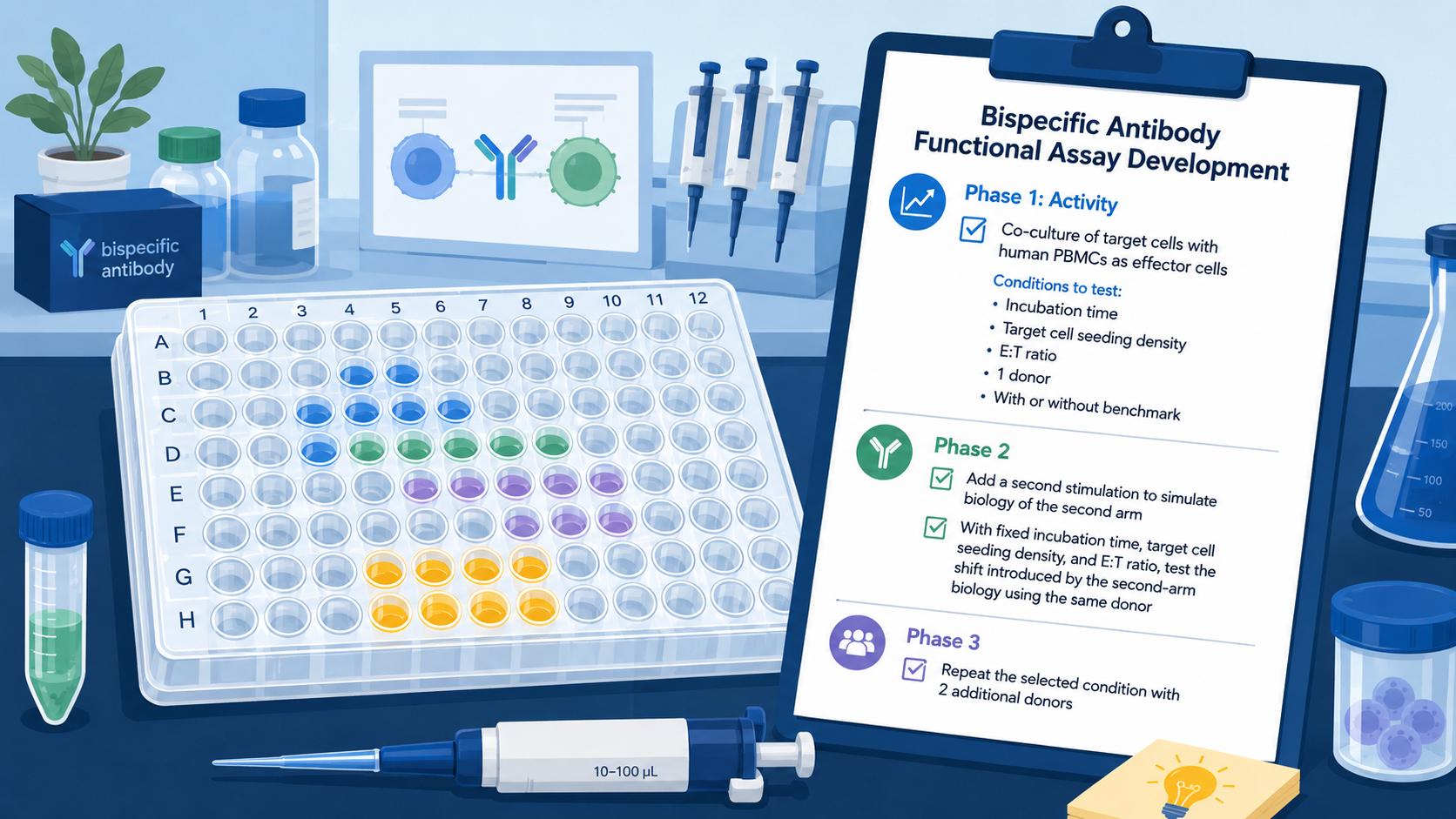
Assay Development Is Not a Line Item
“Assay development” may appear as one clean line in a CRO SOW, but that line can hide many assumptions: how many pilot runs, how many conditions, what controls are included, what defines success, and what happens if no assay window appears. Before signing, founders should ask what is actually inside that line item.
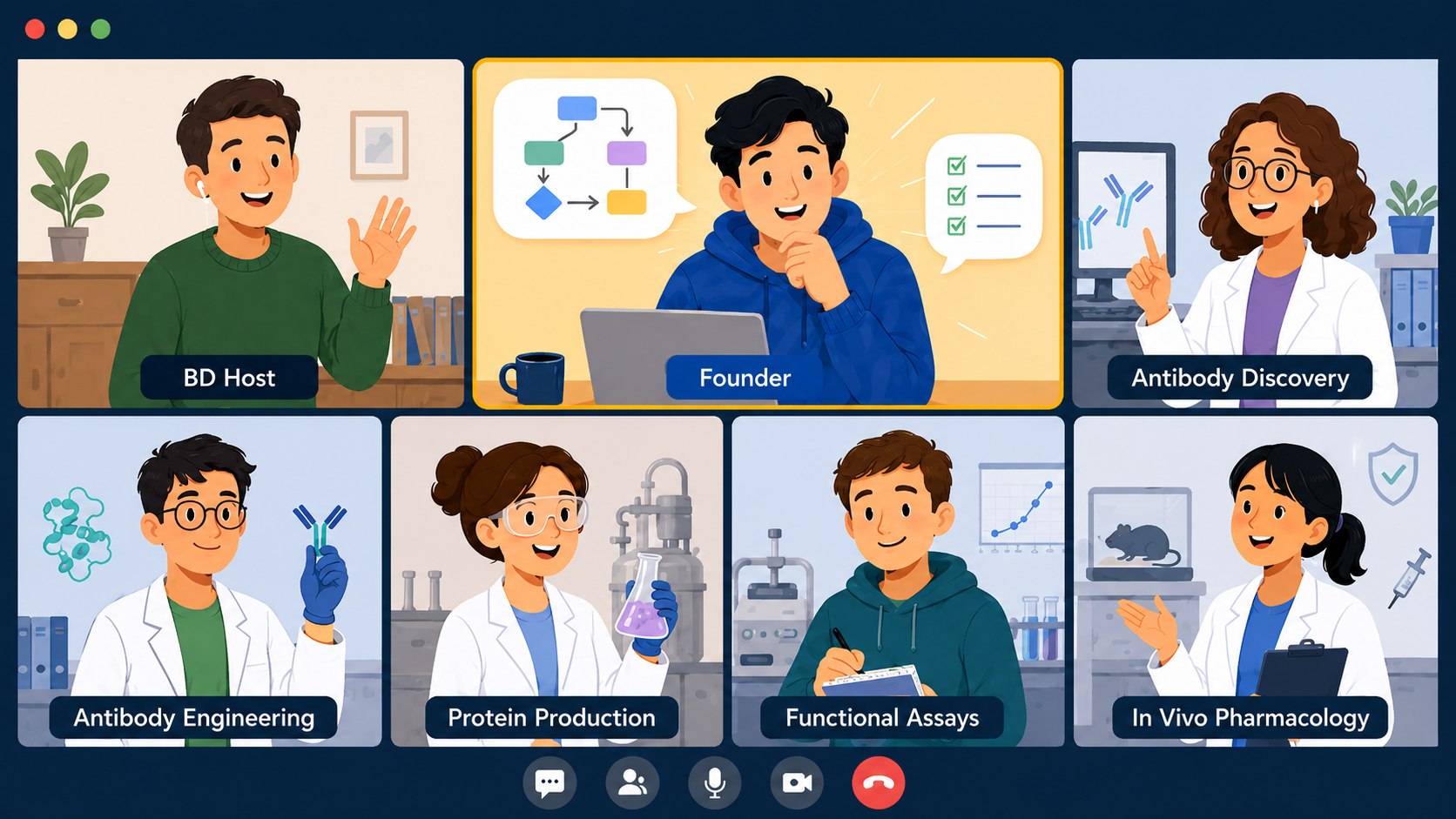
You Drive the CRO Technical Meeting
A CRO technical meeting should be more than a capability check. When four to six technical experts are in the room, founders need to bring the program framework, ask partner-fit questions, and use the hour to test whether the CRO’s workflow matches the program’s real needs. Otherwise, the meeting may feel productive — but quietly leave the driver’s seat empty.
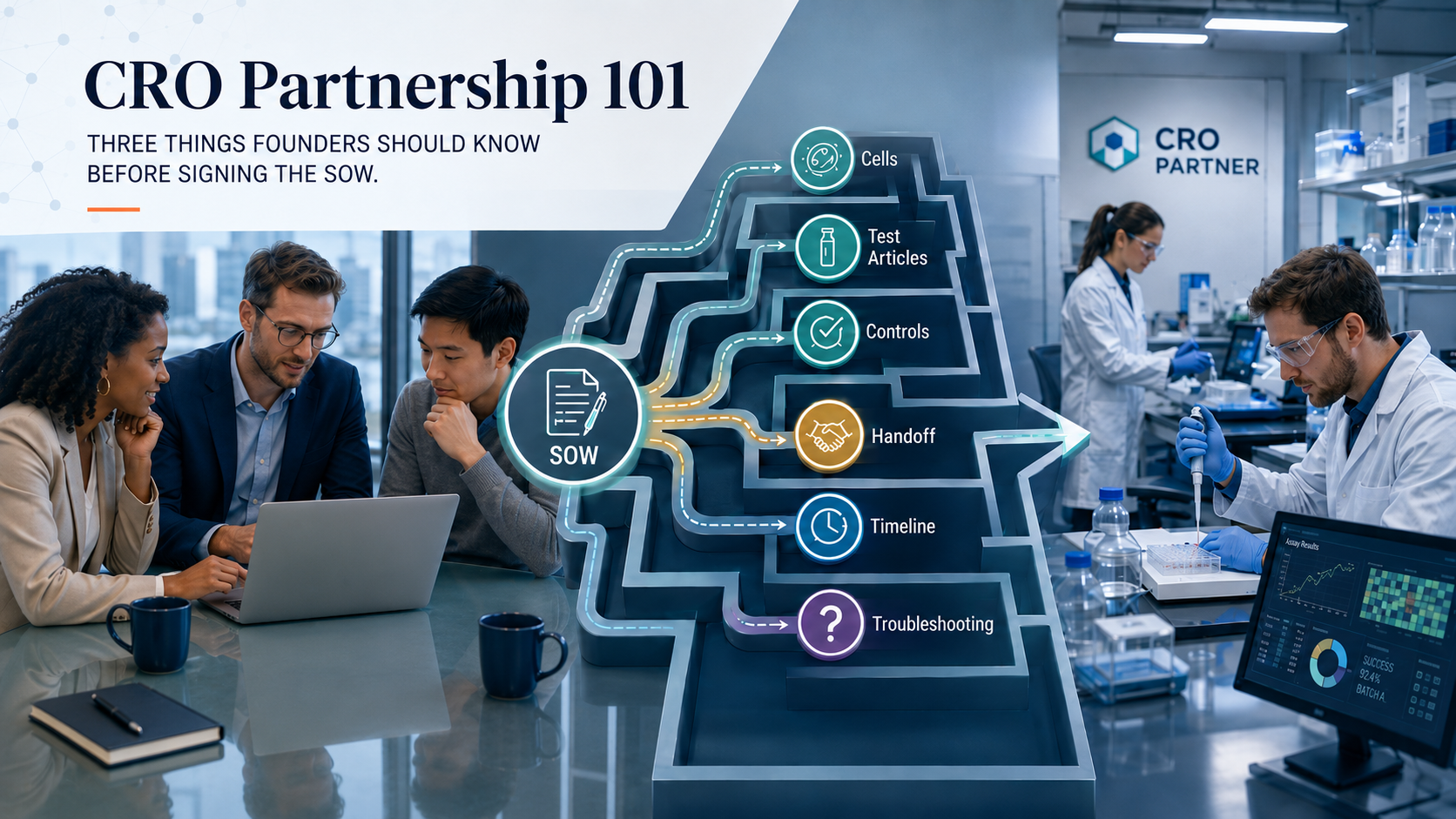
CRO Partnership 101: Three Things Founders Should Know Before Signing the SOW
Working with a CRO can move your program faster — if the science survives the handoff. Here are three things founders should clarify before signing an SOW, from assay readiness to troubleshooting ownership.